
ROAS is often treated as the ultimate measure of marketing success — but on its own, it’s a dangerously incomplete metric. A high ROAS can make campaigns look profitable while masking the real cost of doing business.


It ignores critical factors such as cost of goods, service delivery, staffing, overheads, refunds, discounts, and churn.


When these costs aren’t accounted for, businesses can end up scaling campaigns that generate revenue but little real profit.


To understand whether marketing is truly working, ROAS must be viewed in the context of total costs and overall profitability — not as a standalone indicator of success.

why ROAs on it's own is a misleading metric

You might be looking at your Google Ads dashboard and thinking: “We’re getting 5x ROAS — we must be winning!” But if profits aren’t showing up in your accounts, ROAS is only telling part of the story.


I have worked in many businesses where agencies have come in and presented the campaign success only for me to point out thats the campagn has actyally lost money as the ROAS model and overall business / COGS models are working in isolation.


what roas shows

ROAS (Return on Ad Spend) is simply Revenue from ads ÷ Ad spend

For example, if you spend £10,000 on ads and you generate £50,000 in revenue then your ROAS is  5x. This looks great, but it doesn’t account for your real costs. Lets take a closer look … …

why roas can be misleading

Imagine a small DTC business:


  • Product price: £100

  • Gross margin: 65% → so the product costs £35 to make/deliver

  • Overall profit margin after overheads: 10% → so real profit is £10 per sale


They run Google Ads and see:


  • Ad spend: £1,000

  • Revenue generated from ads: £5,000


ROAS looks amazing!
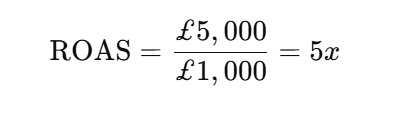
 

Looks like a big win… but let’s check the true value.

Step 1

Revenue – Cost of profit

Step 2

Gross Profit – Ad Spend

Step 3

Assume overheads reduce margin from 65% to 10% → net profit per sale is £10.


If those £5,000 of sales equals 50 units:

Step 4

  • ROAS says: “We earned £5,000 on £1,000 spent → amazing!”

  • Net profit shows: £500 after real costs

So even though ROAS is 5x, the business isn’t making £4,000 profit — it’s only making £500.

key takeaway

ROAS can make campaigns look great, but true business value comes from net profit, CAC, and lifetime value.


Even a high ROAS campaign can generate low real profit if margins are slim or overheads are high. Always calculate the profit after every real cost, not just the revenue generated by ads.


Even if ROAS looks amazing, real business value comes from net profit. Always consider:

  • 1 – Cost of goods

  • 2 – Overheads (staff, software, rent, etc.)

  • 3 – Discounts, refunds, churn

  • 4 – Customer lifetime value


Only by including all these factors can you see which campaigns are truly profitable.

