
While reviewing some old files recently, I revisited a project I worked on some years back where I analysed the poor conversion rate on Maplin's website and the resulting dip in sales. At the time Maplin were going through a particularly difficult period — experiencing significant challenges as a result of a senior management shakeup.
I took a deep dive into the details of their website and explored their ecommerce strategy to assess how they were managing the site. I also looked at what measures, if any, were being taken to fix the various issues and bugs affecting the user experience.
It became clear very quickly that there was a lack of range planning, no real focus on improving conversion rates, and no focus on the customer journey. Below was a rough summary I presented to the leadership team of where I felt they needed to improve.
The Slide Deck I Presented to Leadership
I put together a structured review of the Maplin website covering navigation, product pages, checkout process, and the overall customer journey. This is the actual deck I presented to the senior management team at the time:
Key Highlights From the Deck
The deck runs to 67 slides — here are the six findings that cut to the heart of the problems. Each one still applies to ecommerce businesses today.
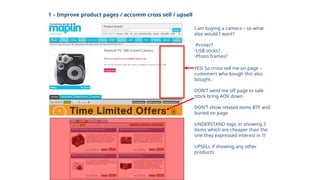
"I am buying a camera — so what else would I want? A printer? USB sticks? Photo frames? Cross-sell me on page. Don't show related items buried below the fold. Don't show items cheaper than the one they expressed interest in. If you're showing anything, upsell." The absence of any logical cross-sell strategy was costing AOV on every single transaction.
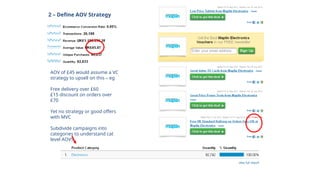
With an AOV of £45, the obvious play is a free delivery threshold at £60 and a discount incentive above £70. Yet there was no strategy in place — no offers designed to pull customers over those thresholds, no category-level AOV data, no commercial logic applied to the promotions being run. The levers existed. Nobody was pulling them.
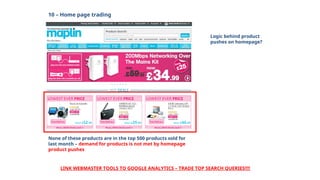
None of the products featured on the homepage were in the top 500 products sold that month. The homepage was being traded on gut feel and internal preference rather than on demand signals. Google Analytics and Webmaster Tools were not linked — meaning the most searched-for products on the site weren't feeding through to what was being promoted. This is one of the most common ecommerce mistakes I still see today.
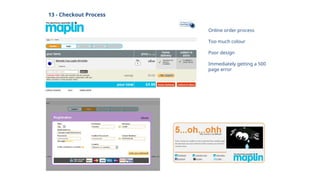
The checkout was actively broken. Customers hitting 500 server errors mid-transaction, confusing layout with too much colour and poor visual hierarchy, no cross-sell at the confirmation stage, and no funnel reporting set up to track where people were dropping out. Every one of these was a fixable problem. None of them were being fixed.
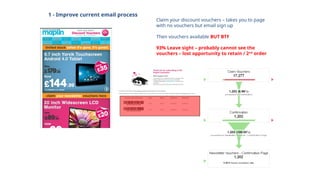
The retention email invited customers to "claim your discount vouchers" — but clicking through took them to a page with no vouchers visible, just an email sign-up. The vouchers were buried below the fold. 93% of people who clicked left before finding them. A direct revenue opportunity squandered by poor page design. The email links in the previous week's newsletter had also been sending customers to 500 error pages.
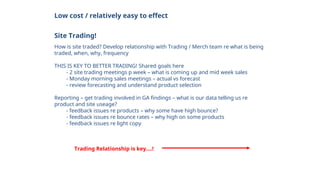
The root cause underneath many of the individual problems was structural: online marketing and the trading/merchandising team were operating in isolation. No shared meetings, no feedback loops, no shared data. The analytics team wasn't feeding product demand signals to buying. The buying team wasn't sharing range plans with online. This disconnect between commercial teams is still one of the most common growth blockers I see in ecommerce businesses today.
Some Background on Maplin
Maplin became particularly popular with hobbyists, DIY electronics enthusiasts, and people looking for unique tech products. Their stores often attracted customers looking for parts for home projects or specific electronic components — a loyal and engaged customer base in a genuinely interesting niche.
However, despite its popularity, Maplin faced financial difficulties in the years leading up to its closure. In 2018, the company went into administration and most of its physical stores were closed — marking the end of an era for many loyal customers.
A brief attempt to revive the brand occurred in 2019 when Maplin was relaunched online, focusing on consumer electronics and technology. But the company struggled to regain the prominence it once had.
What the Analysis Actually Showed
As the slide deck above shows, the customer had to put in a lot of effort just to complete a transaction — entirely due to a poor customer journey. The issues weren't hidden. They were sitting in plain sight in the analytics, visible to anyone who knew where to look and was willing to act on what they found.
The core problems came down to a few recurring themes:
- No structured range planning or merchandising strategy to drive basket size and conversion
- The customer journey was full of unnecessary friction — too many steps, too much confusion
- Checkout process had bugs and usability issues that were actively killing completed transactions
- No meaningful focus on conversion rate improvement at a leadership level
- Analytics were available but findings weren't being acted on with any urgency
After presenting my findings to senior management, I was then asked about improving their social media presence — which felt like entirely the wrong priority at that point. Their main priority needed to be improving conversion rates by fixing the customer journey before addressing any social media strategy. Social drives traffic. Broken UX destroys it.
The Checkout Test — A Real Example
After the contract ended, I decided to place an order to experience the process first-hand. The result? They couldn't locate my registered address.
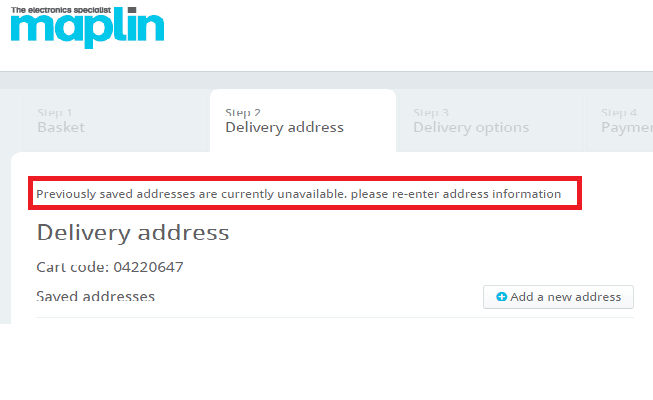
This is not an edge case or a one-off. When a customer at the point of purchase — someone who has decided to buy, has found the product, and has gone through the checkout process — is stopped by a system error that tells them their address doesn't exist, that is a conversion failure that didn't need to happen.
What This Means for Any Ecommerce Business
The Maplin situation is more common than most businesses want to admit. The analytics are usually available. The customer journey issues are usually visible. What's often missing is the combination of someone asking the right questions, the commercial will to prioritise fixes over new features, and leadership that understands that conversion rate is a revenue lever — not a technical detail.
As a footnote: today's Maplin site is significantly better than the version reviewed above. But the story of what went wrong — and why — remains a useful case study in what happens when ecommerce is treated as a channel to maintain rather than a commercial asset to actively grow and optimise.
- Fix the customer journey before worrying about driving more traffic — broken UX destroys the value of every marketing pound you spend
- Conversion rate improvement requires commercial focus at leadership level, not just a development ticket
- Analytics without action are just numbers — the value is in what you do with what they tell you
- Test your own checkout. Regularly. As a real customer, not as an internal user with admin access
- Range planning and merchandising are as important as UX — customers can't buy what they can't find or understand